
Last Updated: February 21, 2026
Most businesses I work with make the same mistake when they start running ads. They send all their paid traffic to their homepage.
It seems logical. The homepage is the front door. It has everything. Services, about, contact, blog links. But that’s exactly the problem. A homepage is built for exploration. A landing page is built for action.
I learned this the hard way with an early client who was spending $3,000 a month on Google Ads and sending every click to their homepage. Their conversion rate was under 2%. We built a single landing page that matched the ad copy, removed the navigation, and focused on one action. Conversions jumped to over 7% in the first month. Same budget. Same ads. Different destination.
That’s the gap landing pages fill. And if you’re spending money on any kind of digital advertising, understanding how they work will change your results.
What a Landing Page Actually Is
A landing page is a standalone page built for a single purpose. It’s where someone “lands” after clicking an ad, an email link, or a social media promotion.
Unlike a normal website page, a landing page has one job. Capture a lead. Book a call. Download a resource. Buy something. That’s it.
There’s no navigation menu pulling people toward your blog. No sidebar with recent posts. No footer full of links. Everything on the page points toward one action.
This isn’t a design preference. It’s a conversion principle. The more options you give someone, the less likely they are to take any action at all. Landing pages work because they remove the noise.
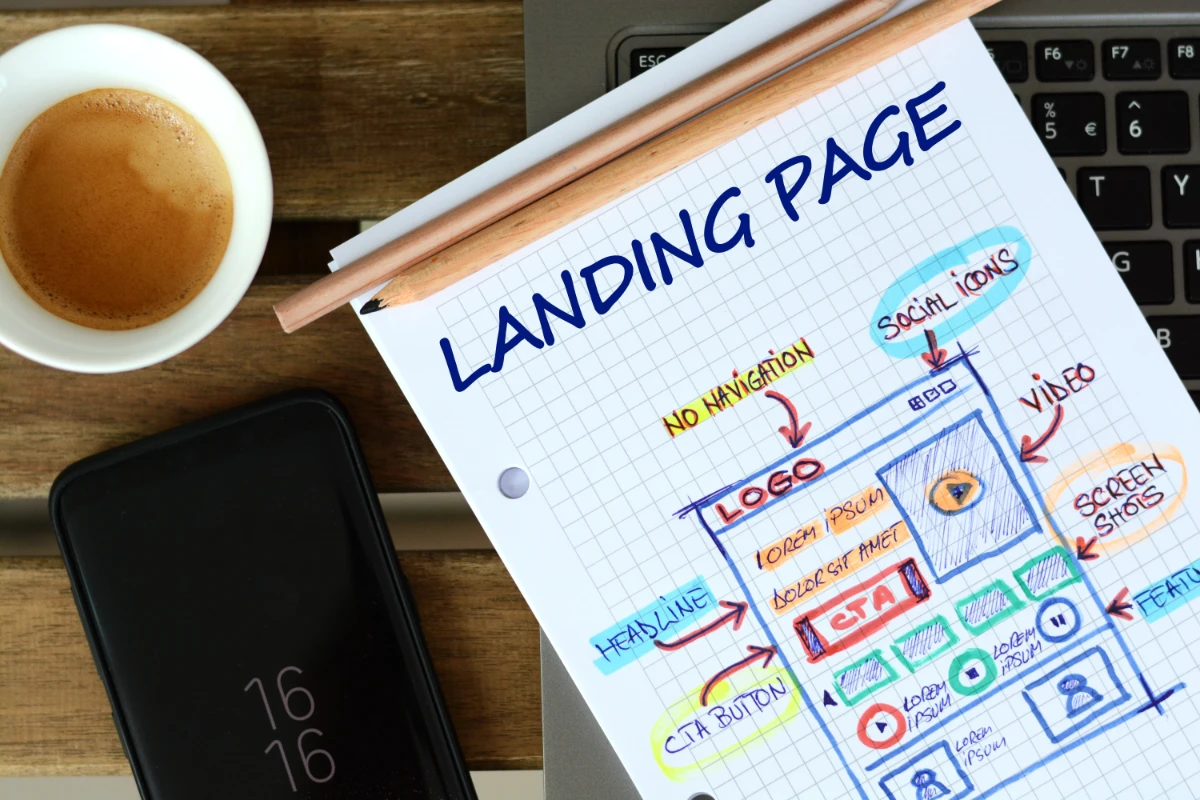
Why Your Homepage Doesn’t Work for Ads
Your homepage serves a lot of purposes. It introduces your brand. It provides navigation to services, about, blog, contact. It gives returning visitors a starting point.
But when someone clicks an ad for a specific offer, they don’t want a starting point. They want the thing they clicked on.
If your ad says “Free Website Marketing Checklist” and the click takes them to a homepage with six navigation items, a hero banner about your services, and a blog feed, you’ve broken the promise. The visitor has to hunt for what they were offered. Most won’t bother.
A landing page keeps the promise. The ad says “Free Checklist.” The page delivers the checklist. One message. One action. No detours.
This is why businesses that use landing pages for their campaigns consistently outperform those that don’t. The page does the selling so the visitor doesn’t have to do the searching.
The Parts That Matter
Landing pages don’t need to be complicated. The best ones are actually simple. But they do need specific elements working together.
The headline has to match the ad or link that brought the visitor there. This is called message match, and it’s the single most important thing on the page. If the ad promises one thing and the headline says something different, trust breaks immediately.
The copy should be short and focused on the visitor’s problem, not your credentials. Lead with what they get, not what you do. A business owner doesn’t care that you have 25 years of experience. They care that you can fix what’s broken or help them get more leads.
The call to action needs to be specific and visible. “Submit” is not a call to action. “Download the Checklist” or “Book a Free Consultation” tells the visitor exactly what happens next. The button should be obvious. If someone has to scroll or search for it, you’ve already lost them.
Trust elements help, especially for higher-commitment actions. A testimonial, a client logo, a brief case study reference, or even a simple line like “No credit card required” can reduce the hesitation that kills conversions.
And the form should only ask for what you actually need. Every extra field you add reduces completion rates. For most lead generation pages, name and email is enough to start the conversation. You can qualify further after the initial contact.
Landing Pages for Different Situations
Not every landing page looks the same because not every campaign has the same goal.
If you’re running Google Ads targeting people searching for a specific service, the landing page needs to get to the point fast. These visitors have high intent. They searched for something specific. Match their query, show them you solve their problem, and make the next step easy. Minimal scrolling. Phone number visible. Form above the fold.
If you’re running social media ads, the dynamic is different. Social visitors usually weren’t actively looking for you. They saw something interesting in their feed. These pages benefit from more context, a stronger hook at the top, and more emphasis on what they’ll get rather than what you offer. Think lead magnets, free resources, or webinar signups.
Email campaigns land somewhere in between. The recipient already knows you to some degree. The landing page just needs to deliver on whatever the email promised and make conversion frictionless.
The common thread is alignment. The landing page should feel like a natural continuation of whatever brought the visitor there. If there’s a disconnect between the source and the page, conversions drop.
The Mistakes I See Most Often
The most common mistake is using the homepage as a landing page. We covered that.
The second most common is asking for too much too soon. A twelve-field form on a page offering a free PDF is going to get abandoned. Start with the minimum. You can always ask qualifying questions later, which is exactly what I do with my own lead generation funnel. The initial capture is lightweight. The follow-up thank you page asks a qualifying question. That two-step approach identifies hot leads without adding friction to the first conversion.
Slow page speed kills landing pages faster than bad copy. If your page takes more than three seconds to load, a significant percentage of visitors will leave before they see anything. This matters even more on mobile, where most paid traffic lands now. If your landing pages are built on WordPress, keeping them fast requires the same kind of ongoing attention that a WordPress care plan provides for your main site.
Ignoring mobile is the other silent killer. More than half of all ad clicks happen on phones. If your landing page form is tiny, the button is hard to tap, or the layout breaks on a small screen, you’re paying for traffic that can’t convert.
And finally, not testing anything. Most landing pages get built once and never touched again. Even small changes to headlines, button text, or form length can shift conversion rates meaningfully. You don’t need expensive tools. A simple A/B test on your headline, run for two weeks, will teach you more about your audience than months of guessing.
How Landing Pages Fit Into a Bigger System
A landing page is not a strategy by itself. It’s one component in a lead generation system.
The system usually looks something like this. An ad or content piece drives traffic to a landing page. The landing page captures the lead. A thank you page or follow-up email moves the conversation forward. A CRM or email sequence nurtures the lead until they’re ready to buy.
Each piece has to work together. A great landing page connected to a broken follow-up process just creates a list of leads that go cold. A smooth follow-up process fed by a bad landing page never gets enough leads to matter.
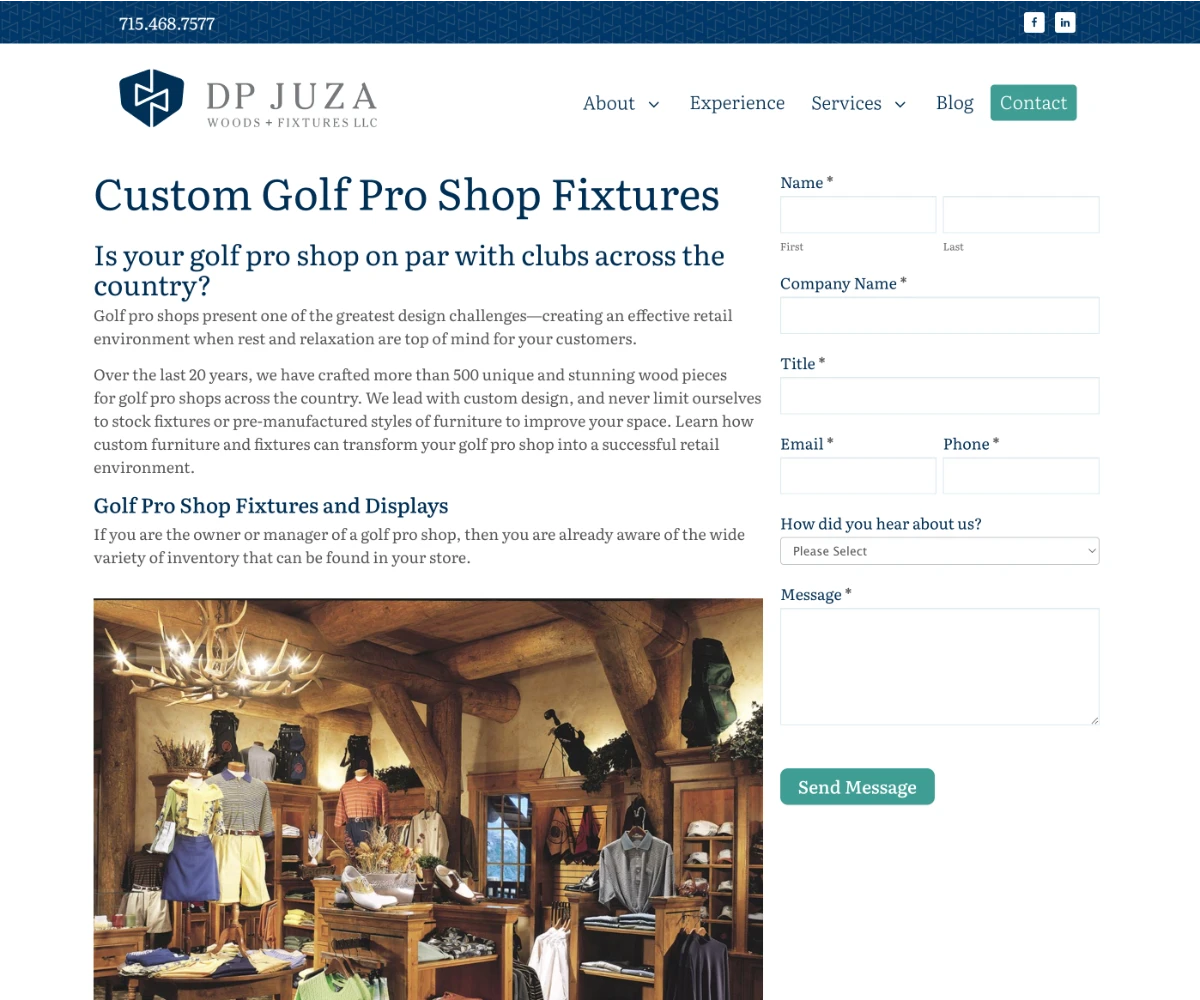
One landing page I built for a custom woodworking client has generated over $2M in qualified leads over five years. Same page. Same offer. Still converting. That’s what a well-built system does when the pieces work together.
If you’re thinking about building landing pages for your business, start with one campaign. One audience. One offer. One page. Get the system working end to end before you scale it. That’s the approach I take with clients through my lead generation and conversion systems work, and it consistently produces better results than trying to build ten pages at once.
When to Build Your Own vs. Get Help
If you’re comfortable with your website platform and understand basic conversion principles, you can build effective landing pages yourself. WordPress with a good page builder can handle it. There are also dedicated tools like Leadpages, Unbounce, and Instapage that simplify the process.
Where most people get stuck is not the building. It’s the strategy. Knowing what to say, how to structure the page, what to test, and how to connect it to the rest of their marketing. The technical part is the easy part. The thinking behind it is what separates pages that convert from pages that just exist.
If your current website isn’t converting the traffic you’re sending it, a landing page is usually the fastest fix. Not a redesign. Not more content. Just a focused page that does one thing well.
If you want help building that system or just want a second opinion on what you’ve already built, get in touch. I’m happy to take a look.