
There’s a common assumption in content marketing that more is always better. Publish more blog posts. Add more pages. Keep the content calendar full. And yes, publishing matters. But for most small business websites, the fastest way to improve search traffic isn’t writing something new. It’s fixing what you already have.
I’ve been doing this for clients for over a decade, and the pattern is consistent. A post that ranked on page two gets updated with better structure, current information, and stronger internal links. Within a few weeks, it moves to page one. Traffic doubles or triples on a page that already existed. No new URL. No new promotion. Just better content on an existing page that Google already knows about.
This works because Google rewards freshness and depth. A page that was published three years ago and never touched again sends a signal that the information might be stale. A page that gets meaningfully updated tells Google the content is actively maintained and worth re-evaluating.
If you have a website with more than a dozen pages, there’s almost certainly low-hanging fruit sitting in your existing content right now.
What “Updating” Actually Means
Updating content doesn’t mean changing the publish date and adding a sentence. That’s cosmetic. Google can tell the difference.
A real content update means looking at what the page was trying to do, evaluating whether it’s still doing it well, and making substantive improvements.
That usually involves some combination of the following.
Fixing outdated information. If your post references tools that no longer exist, statistics from 2019, or advice that’s no longer accurate, readers notice. So does Google. Replace old references with current ones. If a recommendation has changed, say so directly.
Improving the structure. A lot of older content was written as a wall of text or a loose collection of thoughts. Restructuring with clear headings, shorter paragraphs, and a logical flow makes the content more useful to readers and easier for search engines to parse.
Strengthening internal links. When you first published that post, you might not have had related content to link to. Now you probably do. Adding contextual links to your service pages and related blog posts distributes authority across your site and keeps visitors moving through your content instead of bouncing.
Deepening the content. If the original post answered a question in 200 words that really deserves 800, expand it. Not with filler. With the kind of practical detail that makes someone think “this person actually knows what they’re talking about.” This is exactly the approach behind my WordPress FAQ pages, where I seed a short answer, watch which pages get traffic, then expand the winners with real depth.
Updating the SEO elements. Title tags, meta descriptions, heading hierarchy, image alt text. These are small changes that can shift how a page appears in search results and whether people click through.
How to Decide What to Update First
You don’t need to audit your entire site at once. Start with the pages that have the most potential to improve with the least effort.
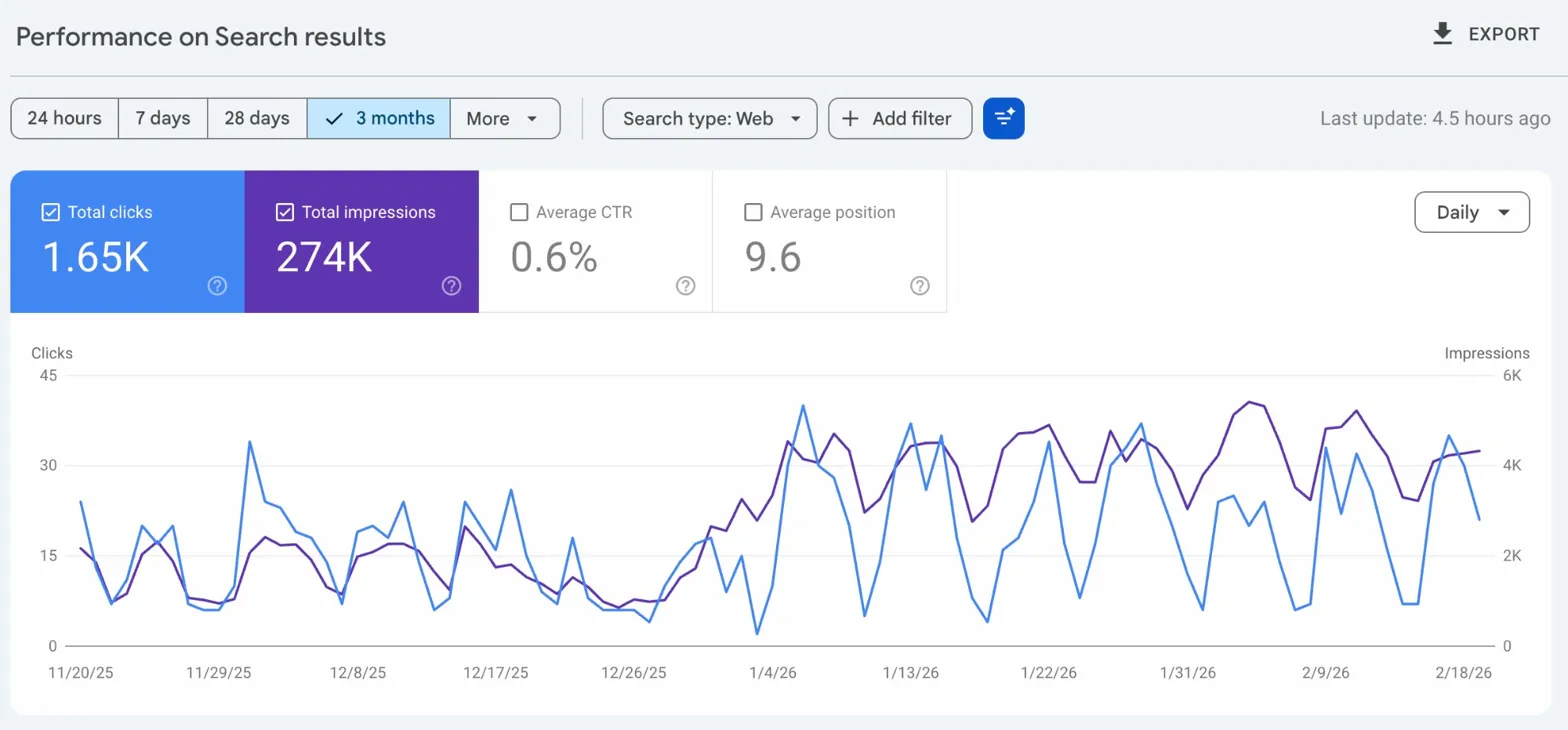
Check your analytics for pages that get impressions in Google but few clicks. These are pages Google considers relevant but isn’t confident enough to rank highly. A content improvement can push them over the threshold.
Look for pages that used to perform well but have declined. Traffic drop-offs on specific pages usually mean the content has been surpassed by competitors who published something better or more current. Updating your page to match or exceed what’s currently ranking is the fastest way to recover those positions.
Identify posts that target keywords you still care about. If you wrote a post two years ago about a topic that’s still central to your business, that post deserves investment. It already has age, backlinks, and index history working in its favor. Updating it is almost always more efficient than writing a new post from scratch on the same topic.
And look for content that doesn’t link to anything. Orphan posts that don’t connect to your service pages or related content are missed opportunities. Adding internal links alone can improve both the updated page and the pages you’re linking to.
What This Looks Like in Practice
Here’s a real example of how this plays out.
Say you have a blog post from 2023 about choosing a web hosting provider. It ranks on page three for a few related terms. The content is accurate but thin. It doesn’t link to anything else on your site. The meta description is auto-generated.
You update the post. Add a section comparing hosting types that your audience actually considers. Include specific recommendations based on your experience managing 60+ WordPress sites. Link to your page about WordPress speed optimization where hosting is discussed as a factor. Write a proper meta description. Improve the heading structure.
Two weeks later, the post moves from page three to page one. Traffic goes from 10 visits a month to 80. And now it’s feeding visitors to your service pages instead of being a dead end.
That’s not hypothetical. That’s the pattern I see every time a meaningful update is made to content that already has some baseline authority.
The Compound Effect
What makes content updating powerful is that the benefits stack.
An updated post ranks higher, which brings more traffic, which sends more authority to the pages it links to, which helps those pages rank better. One update improves multiple pages. Do this across ten posts over a quarter and the cumulative effect on your site’s search visibility is significant.
This is also why content updates and ongoing website maintenance work so well together. A site that’s technically healthy, loads fast, and has fresh content signals to Google that the entire domain is actively maintained. That domain-level trust benefits every page, not just the ones you updated.
Publishing new content still matters. But if you’re only publishing new posts while your existing content decays, you’re running on a treadmill. The new posts gain while the old posts lose and you end up in the same place.
The smarter approach is both. Publish new content where there are gaps. Update existing content where there’s unrealized potential. That’s how traffic compounds instead of plateaus.
Start With What You Have
If you’re not sure where to begin, open Google Search Console and look at your Performance report. Sort by impressions. Find the pages that Google is showing to people but that aren’t getting clicks or are stuck on page two or three. Those are your update candidates.
Pick three. Make them meaningfully better. Resubmit them in Search Console. Then watch what happens over the next month.
You’ll probably find that the content you already have is more valuable than you think. It just needs attention.
If you want help identifying which pages to prioritize or how to structure the updates for maximum impact, that’s part of what I do. Get in touch and we can take a look together.