
Most local SEO audits produce a report. A good one produces a plan.
There is a difference. Reports tell you what is wrong. Plans tell you what to do about it, in order, in a way that actually moves rankings. If you have been paying for audits and not seeing results, the audit probably stopped at the report.
Here is how I approach a local SEO audit when I am doing the work myself. These are the same steps I use for clients, in roughly the same order.
1. Find Out What Is Actually Possible
Before you touch anything, you need to understand your ceiling.
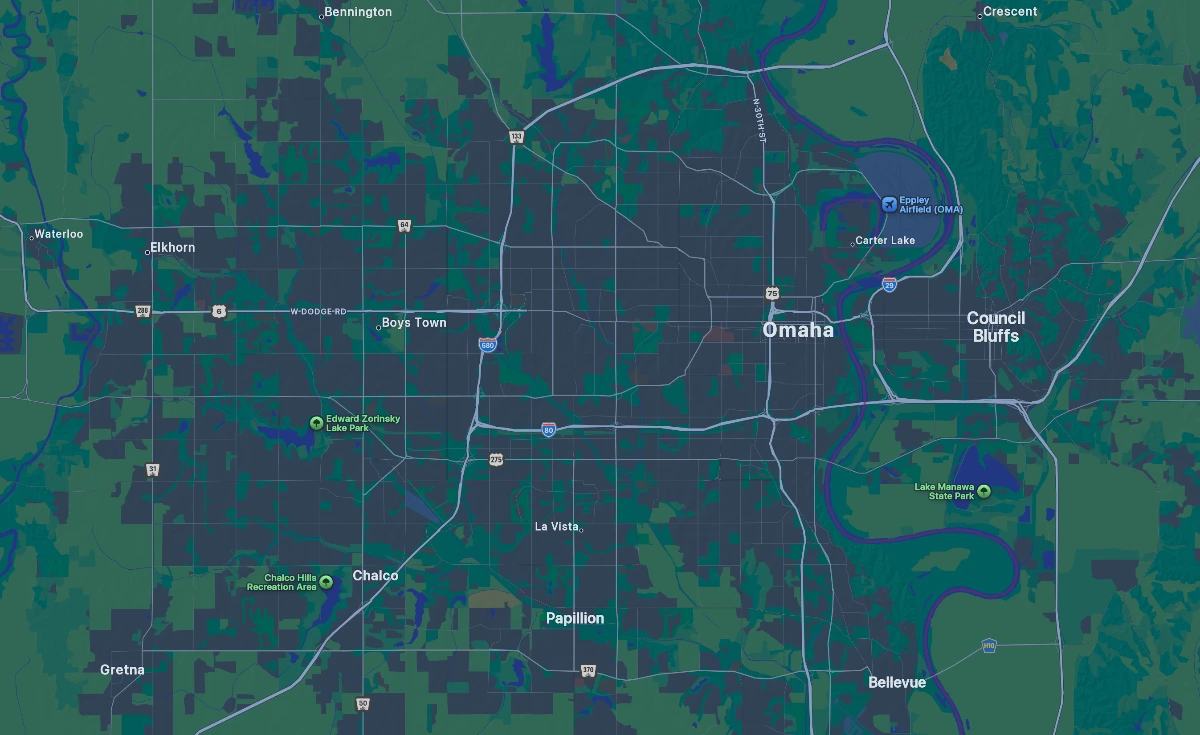
Pull your top five keywords and run a grid-based rank tracker. Tools like LocalFalcon or Places Scout show you where you rank block by block across your service area. Then compare that picture to the business sitting at position one.
Sometimes the gap is fixable. Sometimes a business has simply hit the geographic limits of its location and ranking further out requires a second address, not more optimization. Knowing which situation you are in changes everything that comes next. There is no point chasing rankings that your location cannot support.
2. Look at the Business Name Carefully
Keywords in your Google Business Profile name is one of the strongest local ranking signals that exists. That is not new information, and it has been true for years. What most people do not know is that you can address this without renaming your legal entity.
A DBA (doing business as) filing lets you operate under a trade name that includes location or service keywords. It is a legitimate, legal approach that Google allows. The keyword stuffing that gets businesses penalized is when people add terms that are not how the business actually operates. A DBA changes how you actually operate.
This is not a move for every business, but when it applies, the impact can be significant.
3. Audit Your Primary Category Like It Matters, Because It Does
Your primary GBP category is the most important field in your entire Google Business Profile.
I have seen businesses drop from position one to position thirty-one overnight because their primary category changed, sometimes from a Google update, sometimes from an accidental edit. It is that sensitive.
The right approach is to look at what categories the top three businesses in your market are using, not just guess. A lot of category choices feel logical but underperform because the highest-converting searchers are looking for something slightly different. Data beats intuition here every time.
4. Check Your Hours Against Your Competition
This one surprises people. Google’s local algorithm gives a boost to businesses that are currently open when someone is searching. That means your hours are not just customer-facing information. They are a ranking factor.
If your competitors list 24/7 availability through an answering service and you close at five, you are giving up rankings during the hours they stay open. Whether a 24/7 answering service makes sense for your business is a separate question. But you should know the trade-off you are making.
5. Assess the Review Situation Honestly
Review velocity matters. Not just the total number, and not just the average rating. Google pays attention to whether new reviews are coming in consistently.
When I audit a local business, I look at three things: how many reviews the top competitor has, how many they have gotten in the last 90 days, and what the average rating gap looks like. That tells me whether the review problem is about total volume, recency, or quality.
A stalled review pipeline is a real ranking problem. It signals to Google that the business may be less active than it used to be.
6. Evaluate the Content for Intent, Not Volume
Most local businesses do not need more content. They need better-structured content.
The question I ask is whether each page is built around a specific type of search intent, or whether it is trying to cover everything at once. A page that mixes emergency service intent with pricing research intent with general information rarely ranks well for any of it. Google has gotten very good at separating those, and your site structure should reflect that.
If you want to go deeper on how I think about content structure for local SEO, this is the framework I use: Local SEO Help
7. Refresh Old Content Before Adding New
Updating existing content consistently outperforms publishing new content at random. The publish date is a real signal. Pages that have not been touched in two or three years are telling Google they are probably not current.
The audit move here is to identify which pages are already pulling traffic or have real backlinks pointing to them. Those are your highest-leverage update targets. Refreshing a page that already has authority is almost always faster than building a new one from scratch.
This connects directly to content pruning, which I have written about separately: Content Pruning: How to Revitalize Your Website
8. Audit the Navigation Menu
Your navigation tells Google which pages you think matter most. If every page on your site is in the menu, you are telling Google nothing.
I regularly see sites where cleaning up the navigation, removing low-value pages, consolidating categories, has a bigger impact than any content project they were planning. It forces topical clarity and makes internal link authority flow to pages that actually convert.
A cluttered navigation is also just a worse experience on mobile, which has its own ranking implications.
9. Check the Site on Mobile
Not just whether it loads. Whether it is actually usable.
The specific thing I look for is whether contact information and calls to action are accessible while scrolling. A sticky navigation bar that keeps a phone number or “Get a Quote” button visible throughout the page is one of the highest-ROI changes a local business site can make. Simple to implement, directly affects conversion rate, and signals engagement to Google.
If your mobile experience is rough at a structural level, the underlying issues are usually worth addressing: Core Web Vitals and SEO
10. Look at Backlinks With Realistic Expectations
Backlinks still matter. Volume does not.
For most local businesses, the audit question is not “how do I get more links.” It is “do I have any links that signal real local authority.” A link from a regional supplier, a chamber of commerce listing with actual traffic, a press mention, a sponsor page from a local organization. Those carry weight that a hundred directory submissions do not.
If the backlink profile is thin, the plan is slow and legitimate: identify real partnerships, get listed where it makes sense, and earn mentions the same way any credible local business would.
What This Tells You
A good audit produces a prioritized list of real changes, not a long document full of flags.
If you have been through an audit and walked away with a PDF but not a clear next step, that is a gap I can close. The Local SEO Help page is the right starting point if you want to talk through your specific situation.
And if you want to understand the technical side of why some of these issues compound over time, the Essential Technical SEO Checklist covers what is usually lurking underneath.